
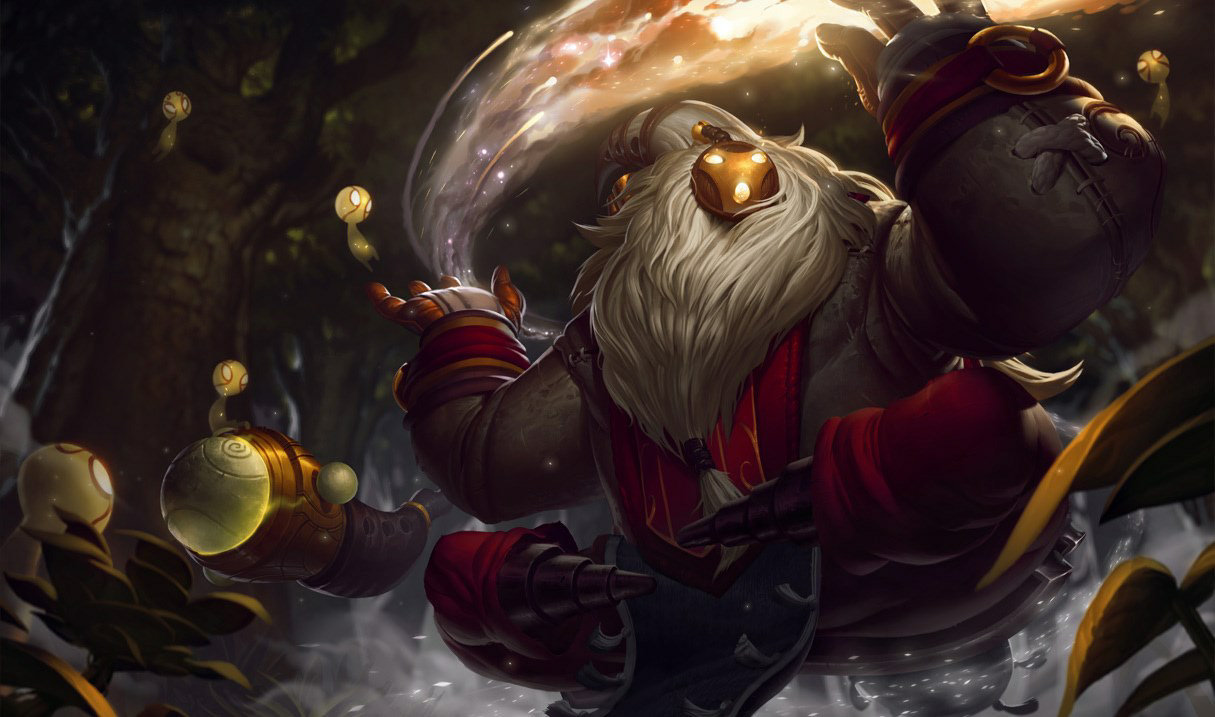
Bard Build, Abilities, Runes, Items, Combos, Skins & Guide 2026
A complete Bard support guide with current build recommendations, runes, skill order, roaming routes, chime mechanics, combos, counters, skins and lore.
Bard Overview
Bard is a roaming support who combines crowd control, healing, unusual terrain mobility and one of the most game-changing ultimates in League of Legends. His passive, Traveler's Call, rewards collecting Ancient Chimes across the map and empowers his Meeps, making movement and timing central to his playstyle.
Unlike a support who stays beside the marksman at all times, Bard often creates value by moving between lanes, helping the jungler, placing vision and returning to lane when his partner can safely manage the wave. The key is to roam with a purpose rather than leaving the lane just to collect every nearby chime.
Bard's ultimate, Tempered Fate, can freeze champions, minions, monsters and turrets in stasis. It can start a fight, protect an ally, delay an objective or accidentally save an enemy, so communicate with your team and practise its timing.
Quick Facts
Champion: Bard
Title: The Wandering Caretaker
Class: Catcher / Support
Primary Role: Support
Damage Type: Primarily magic
Attack Type: Ranged
Difficulty: High
Core Mechanic: Chimes and Meeps
Current Patch: 26.21
Bard Stats
Bard Abilities
Bard's abilities are strongest when used together: Q provides a stun setup, W prepares healing shrines, E opens a path through terrain and R creates a temporary stasis zone.
Passive — Traveler's Call
Bard collects Ancient Chimes that grant experience, restore mana and provide out-of-combat movement speed. Chimes also empower his Meeps, which add magic damage to basic attacks and gain stronger effects as Bard collects more.
Q — Cosmic Binding
Bard fires an energy bolt that damages and slows the first enemy hit. If the bolt continues into terrain or a second enemy, it stuns the targets. Look for lines where an opponent stands near a wall or another champion.
W — Caretaker's Shrine
Bard places a shrine that charges over time. An ally who walks over it receives healing and a burst of movement speed. Place shrines slightly behind your lane partner or along a safe retreat route, where enemies cannot easily destroy them.
E — Magical Journey
Bard opens a temporary one-way tunnel through valid terrain. Allies can travel through it faster, but enemies can also use the portal. Use it for ganks, escapes, objective rotations and creative angles—not as an automatic engage.
R — Tempered Fate
Bard sends a magical projectile that puts units and structures in its area into stasis for a short duration. It can isolate a target, pause an objective or protect teammates from an incoming engage. Be careful: allies and enemies can both be affected.
Bard Support Build — Patch 26.21
Patch 26.21 build references point toward a mobile utility setup built around movement speed, durability and team protection. The sequence below is a practical starting point, not a guaranteed best build for every rank or matchup.
Core Items
- Bloodsong — support quest upgrade for added pressure after Bard applies his crowd control and empowered attacks.
- Boots of Swiftness — helps Bard roam between lanes and reposition around fights.
- Dead Man's Plate — movement speed and durability support Bard's roaming playstyle.
- Locket of the Iron Solari — team-wide defensive value against burst and area damage.
- Bandlepipes — utility for team movement and coordinated engagements.
- Redemption — an additional team-healing and fight-swinging option when your team benefits from it.
Situational Choices
- Mikael's Blessing: consider it when cleansing important crowd control can save a carry.
- Zeke's Convergence: useful when your team can follow Bard's crowd control with reliable damage.
- Liandry's Torment: a damage-oriented option for longer fights, but not a substitute for utility when your team needs protection.
- Knight's Vow: consider it when one fed ally needs extra protection.
- Mercury's Treads: an alternative when magic damage or crowd control threatens your ability to roam safely.
Adapt the final slots to enemy damage, crowd control, team composition and the actual state of the current in-game shop.
Summoner spells: Flash is the standard choice. Ignite offers lane pressure and kill threat; Heal or Exhaust can be better when your lane partner needs extra protection.
Bard Runes
Domination — Primary
- Electrocute: adds burst to short trades and pick attempts.
- Cheap Shot: complements Bard's slows and stuns.
- Deep Ward: supports vision control when roaming into enemy territory.
- Relentless Hunter: improves out-of-combat roaming speed.
Sorcery — Secondary
- Celerity: amplifies movement-speed bonuses.
- Scorch: adds pressure to early trades.
Some setups use Inspiration secondary runes such as Magical Footwear and Jack of All Trades. Choose based on the matchup and current rune data rather than treating one page as mandatory.
Rune shards: attack speed is useful for trading and chime collection, while movement speed and a defensive health shard support Bard's roaming and survivability. Adjust defensive choices to the enemy lane.
Bard Skill Order
General max order: Q → W → E, while levelling R whenever available. Cosmic Binding is Bard's primary trading and crowd-control tool, so ranking it first usually gives the most reliable lane impact.
| Priority | Ability | Reason |
|---|---|---|
| 1 | Q — Cosmic Binding | Improves primary poke and stun setup. |
| 2 | W — Caretaker's Shrine | Improves healing and sustain for skirmishes. |
| 3 | E — Magical Journey | Usually ranked after Q and W; mobility remains valuable with an early point. |
| Ultimate | R — Tempered Fate | Take at levels 6, 11 and 16 whenever available. |
Typical early skill points are Q at level 1, W at level 2 and E at level 3. Adjust only when a specific invade, escape or lane situation calls for a different opening.
Bard Combos
Reliable Stun
Use Q on an enemy positioned near terrain or another enemy so the second hit can trigger the stun. Follow with an empowered basic attack if it is safe.
Trade and Retreat
Approach with a Meep-empowered attack, connect Q when the angle is favourable, then use movement speed and a prepared W shrine to disengage.
Portal Gank
Coordinate with your jungler, use E through a suitable wall and emerge from an unexpected angle. Remember that opponents can follow the same tunnel.
Ultimate into Q
Use R to place an isolated enemy or group in stasis, then prepare the follow-up Q stun as stasis ends. Communicate the timing so teammates do not waste their own abilities.
Objective Delay
Tempered Fate can briefly put a major monster or nearby units in stasis. Use it to buy time for your team, but coordinate carefully because it can also delay your own team's damage.
Defensive Ultimate
Target the dive path or the enemies threatening your carry rather than automatically aiming for the largest possible group. A defensive R can be more valuable than a risky engage.
How to Play Bard
Early Game
Trade when your Meep attack and Q angle are available, and prepare W shrines before your lane partner needs to retreat. Do not abandon the lane when a large minion wave is about to crash or your partner is vulnerable. Chimes are valuable, but collecting them at the wrong time can cost experience and pressure.
Roaming and Chime Collection
Look for roam windows after a wave is pushed, your lane partner can safely farm, or your jungler is preparing to contest an objective. Collect chimes along a route that also creates vision, a gank angle or a safe return path. A useful roam has a purpose beyond movement alone.
Mid Game
Move with your jungler, establish vision around objectives and use E to create routes your opponents may not expect. Bard can influence fights before they begin by controlling vision and approaching from unusual angles. Keep track of your team's position before starting a play.
Late-Game Team Fights
Save Q for a high-value stun opportunity and use R with a clear plan. Stasis can protect a teammate, isolate an enemy carry or buy time for your team to arrive, but a poorly timed ultimate can rescue opponents or interrupt allied damage. Use your mobility to stay near the fight without being the first champion caught.
Key Tips
- Collect chimes when your lane partner can safely manage the wave.
- Place W shrines where allies can reach them but enemies cannot casually destroy them.
- Remember that enemies can use your E tunnel too.
- Do not cast R just because multiple champions are grouped; check whether your team can follow up.
- Use Q against a wall or a second target for the stun rather than expecting every hit to stun.
- Roam with vision, a gank plan or objective timing in mind.
Bard Counters and Matchups
Bard's performance depends on lane pressure, how safely he can roam and whether opponents can punish his unconventional positioning. Current Patch 26.21 matchup references identify Nami and Leona among difficult matchups in some Emerald+ datasets, while Thresh and Lulu appear more favourable in the same dataset. Matchup rates vary by sample size and rank, so treat these as a current signal rather than a universal rule.
Threats to Respect
Engage supports can punish Bard when he returns to lane or uses E without a safe exit. Track enemy engage cooldowns and avoid leaving your carry exposed to a decisive all-in.
Against Poke
Prepare shrines before trading, use brush and movement speed to avoid repeated skill shots, and do not spend too much health collecting chimes in exposed areas.
Use Roaming Windows
Against a lane that is difficult to win directly, create value with controlled roams and vision—but only when your lane partner can safely remain alone.
How to Counter Bard
Pressure his lane partner when Bard leaves, destroy shrines before they charge, watch for his E tunnels and avoid clumping predictably for Tempered Fate.
Bard Skins
Loading Bard skins…
Bard Lore
Bard is a mysterious celestial caretaker who travels through Runeterra to preserve a fragile balance against forces that threaten existence. His motives are difficult for ordinary people to understand, but his actions tend to protect the world from catastrophic magical imbalance.
He is accompanied by playful spirit creatures called Meeps and is drawn to powerful magical artefacts. His presence is often marked by strange music, chimes and a sense that he has arrived from somewhere beyond the ordinary world.
That cosmic identity is reflected in his gameplay: he appears where he is needed, creates unexpected routes, helps allies recover and can temporarily remove a battlefield's most important pieces from play with Tempered Fate.
Bard Patch History
Patch 26.21 is the current patch reference for this guide as of October 22, 2026. Riot's Patch 26.18 notes reduced Bard's base armor from 34 to 32 and armor growth from 5 to 4.7. Patch 26.20 included Bard changes specifically for ARAM: Meep AP ratio, Meep recharge and Meep auto damage per chime breakpoint. Do not apply those ARAM-only changes to Summoner's Rift build advice.
| Patch | Change / Context |
|---|---|
| 26.21 | Current guide reference; check the official notes for any mode-specific changes before publishing. |
| 26.20 | Bard received Meep-related adjustments in ARAM: AP ratio increased from 50% to 67%, recharge reduced from 8 seconds to 5 seconds, and auto damage per chime breakpoint increased from 6 per 3 chimes to 10 per 3 chimes. |
| 26.18 | Base armor changed from 34 + 5 per level to 32 + 4.7 per level. |
Bard FAQ
What is the best Bard build in Patch 26.21?
A common support setup uses Bloodsong, Boots of Swiftness, Dead Man's Plate, Locket of the Iron Solari and Bandlepipes, with situational utility items. Adapt the order to enemy damage and your team's needs.
Which runes are best for Bard support?
Electrocute with Cheap Shot, Deep Ward and a roaming rune such as Relentless Hunter is a current option. Celerity and Scorch are a possible secondary pairing; alternative Inspiration setups can also work.
What ability should Bard max first?
Cosmic Binding (Q) is generally maxed first, followed by Caretaker's Shrine (W), then Magical Journey (E). Level Tempered Fate (R) whenever available.
When should Bard collect chimes?
Collect chimes when your lane partner can safely farm and the wave state allows you to leave. Prioritise safe routes that also help with vision, ganks or objectives.
Can enemies use Bard's Magical Journey?
Yes. The tunnel can be used by enemy champions too, so consider where it exits and whether you are giving opponents a route to follow.
Does Bard's ultimate affect allies?
Yes. Tempered Fate can put allied champions into stasis along with enemies and other valid units. Use it carefully to avoid interrupting your own team's damage or saving an opponent.
What changed for Bard in Patch 26.20?
Patch 26.20 included Meep changes in ARAM. The listed adjustments were mode-specific and should not be treated as Summoner's Rift balance changes.
Source
Patch-specific changes and mode notes are based on Riot Games' official patch notes. Champion stats and skin names are requested dynamically from the current Data Dragon dataset when available.
Last reviewed: October 22, 2026 • Patch reference: 26.21